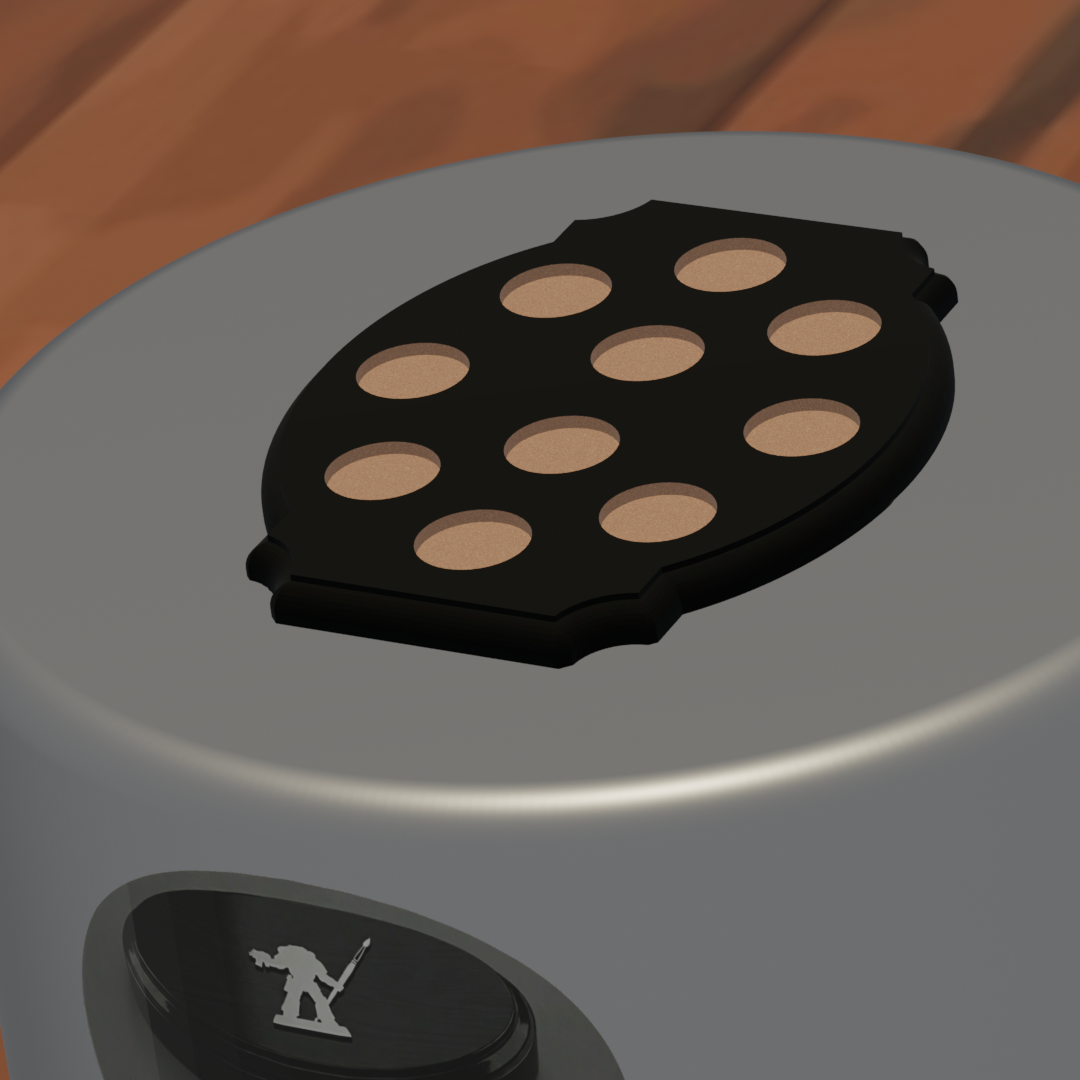
Honour Dais
Formal. Elevated. Resolute.
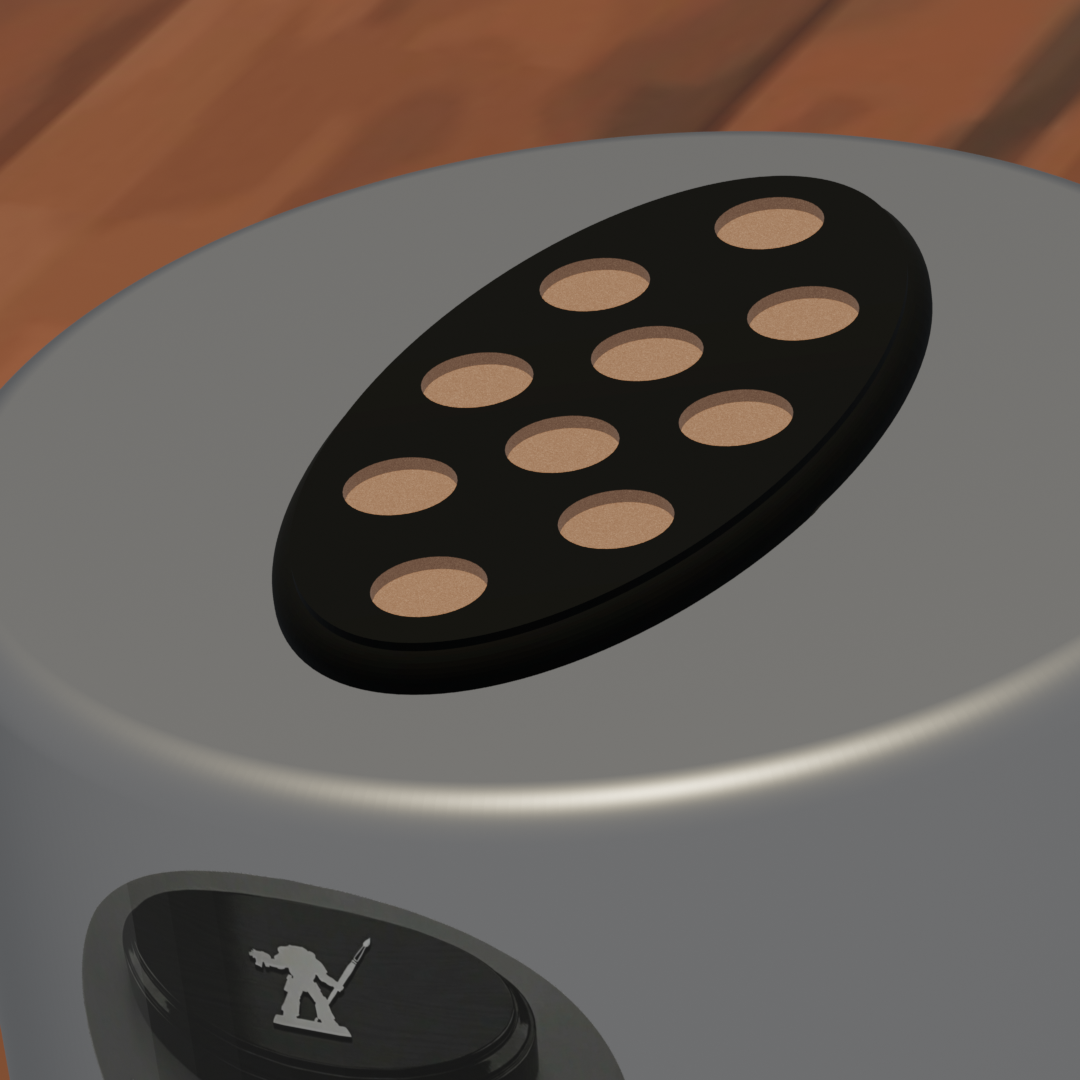
The Honour Dais plinth is the purest expression of presentation. Its elongated oval form is restrained, balanced, and unmistakably ceremonial — a shape reserved for those who stand apart through rank, achievement, or duty.
This is a plinth for units of distinction.
For veterans, command squads, and chosen elites.
For warriors who are presented, not merely assembled.
The smooth, uninterrupted outline creates a calm visual field that places total focus on the models themselves. Nothing competes. Nothing distracts. The unit stands unified, dignified, and complete.
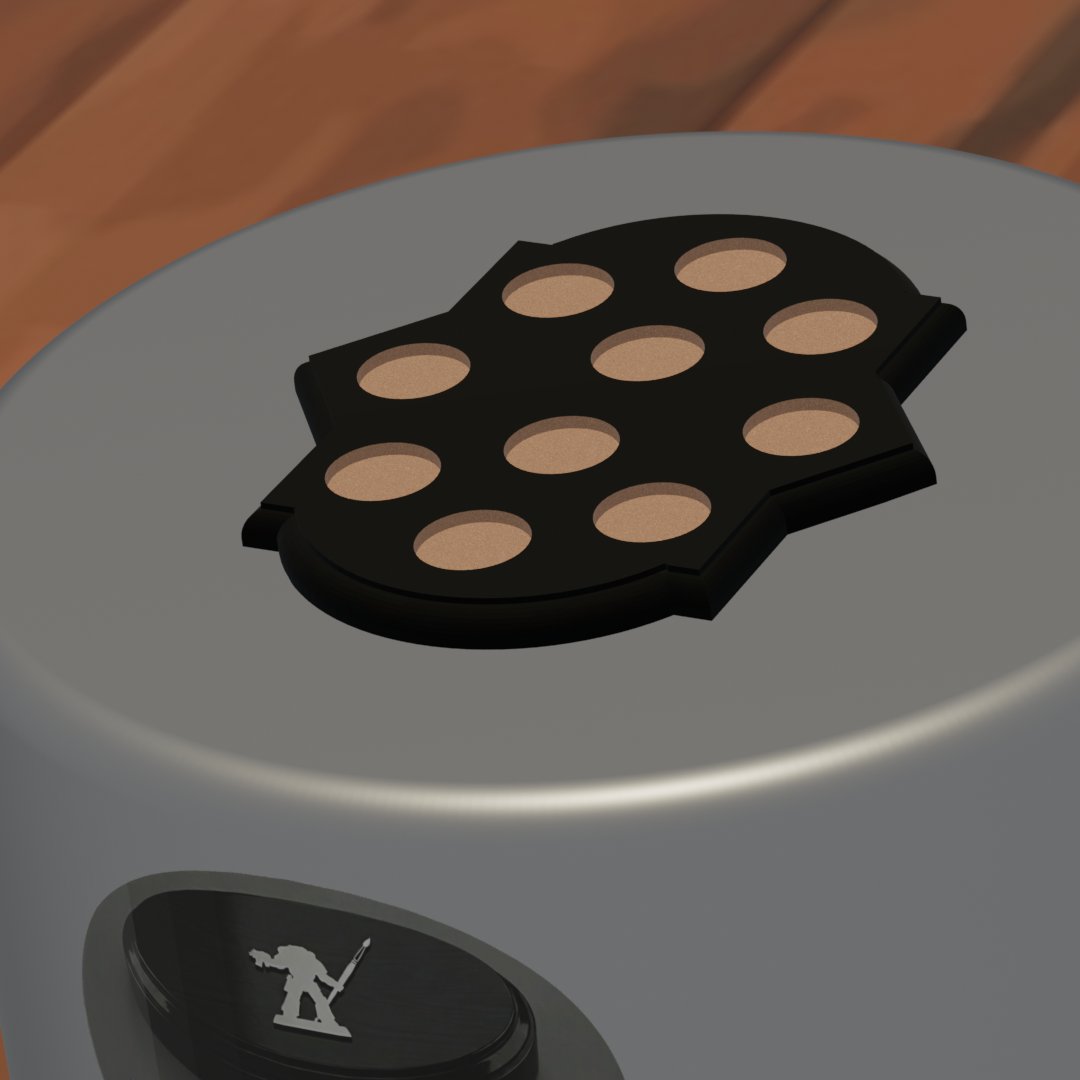
Tudor Arch
Measured. Grounded. Classical.
The Tudor Arch plinth is defined by balance — strong vertical presence softened by flowing curves. Inspired by traditional architectural forms, its silhouette frames a squad with quiet authority, giving your models structure without stealing focus.
This is a plinth for disciplined forces.
For painters who value order.
For armies that advance as one.
The gently arched profile creates natural visual rhythm across the formation, guiding the eye from model to model while maintaining a cohesive whole. It reads as intentional from every angle — on the painting desk, in the cabinet, or on display at events.
Aegis
Defensive. Resolute. Unyielding.
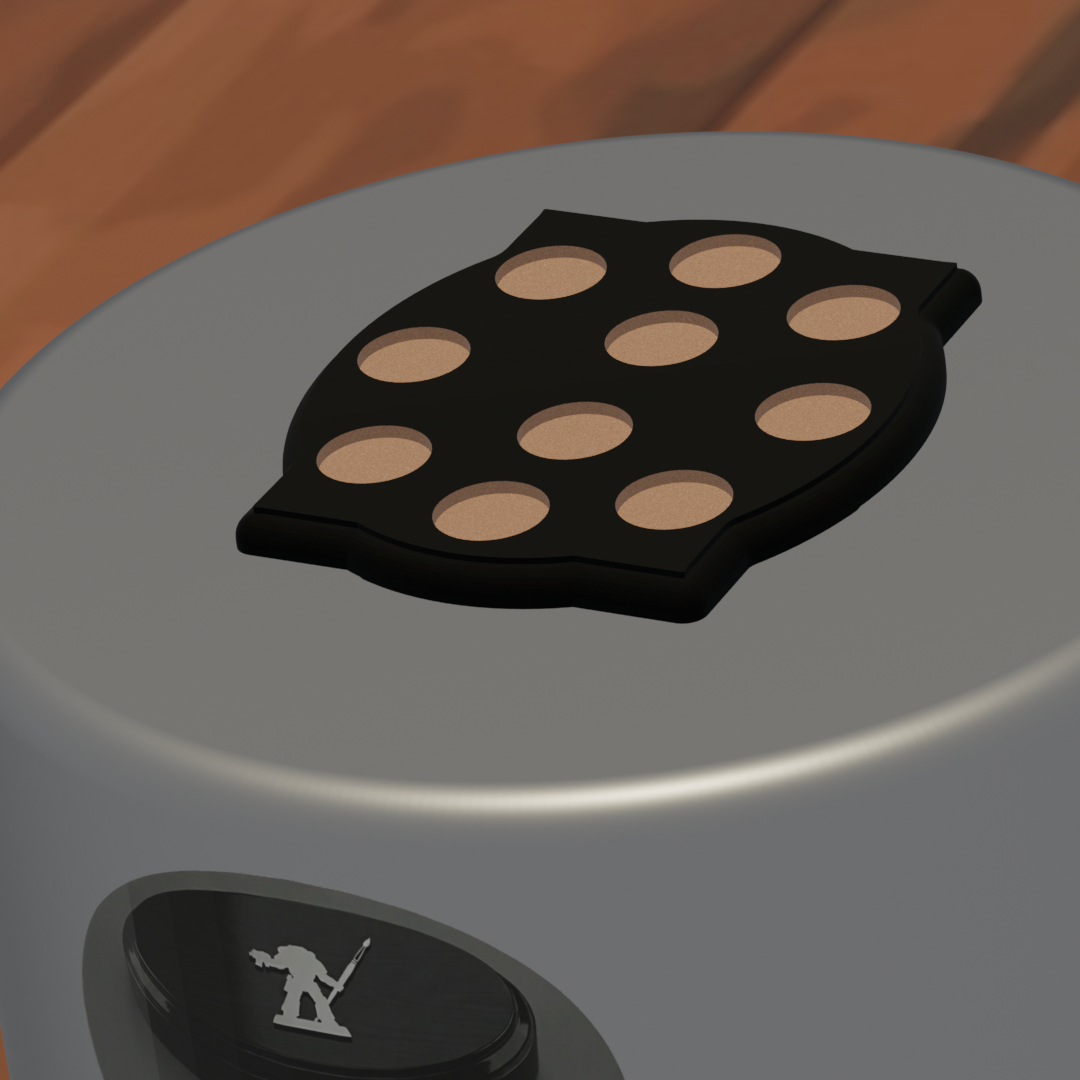
The Aegis plinth is a statement of protection and control. Its shield-like silhouette evokes fortification and frontline resilience — a form that feels deliberate, solid, and prepared to hold against pressure.
This is a plinth for armies that endure.
For shield walls.
For immovable lines and resolute advances.
The strong vertical sides and rounded crown create a sense of guarded cohesion, enclosing the squad within a single visual boundary. Every model feels protected, framed, and part of a unified defensive whole.
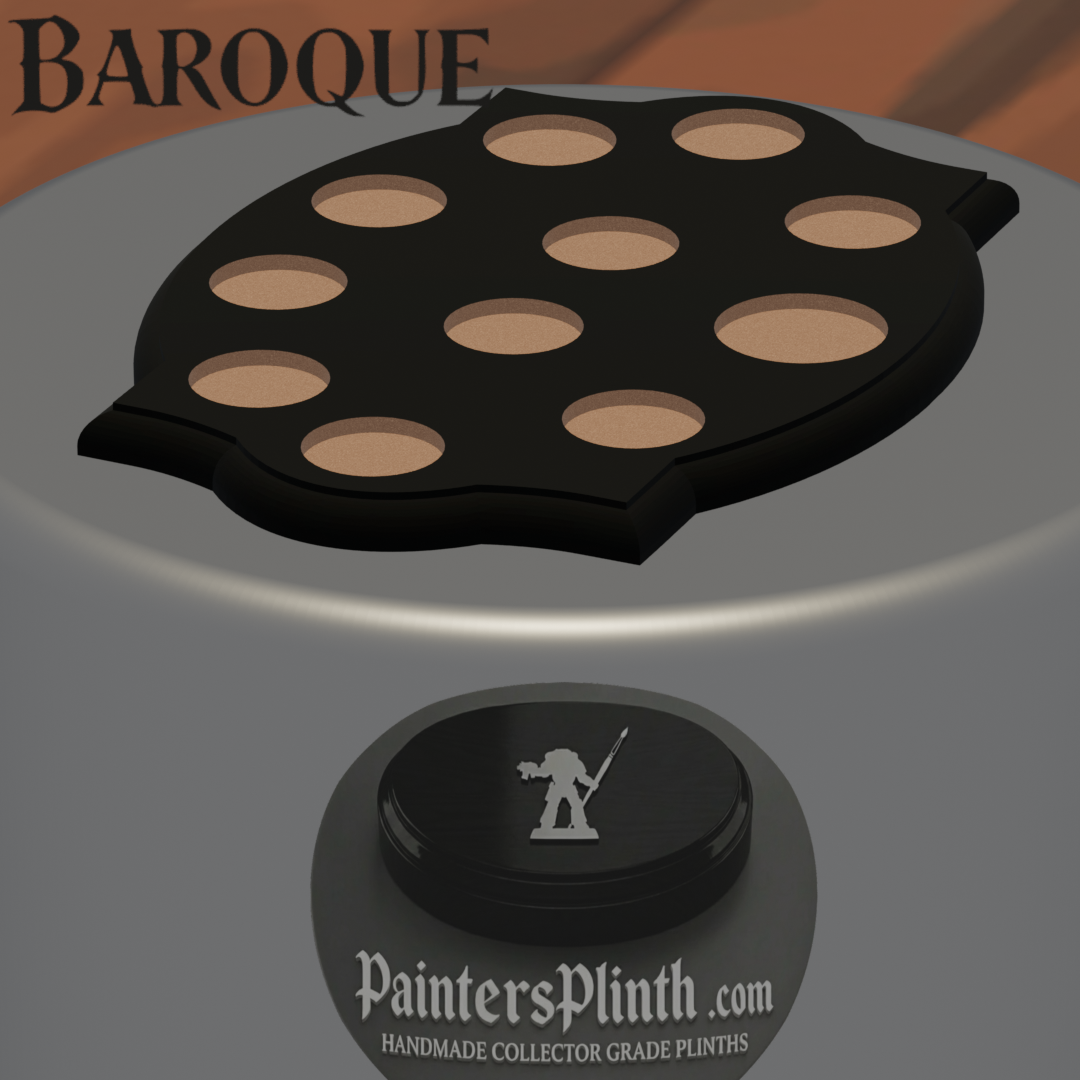
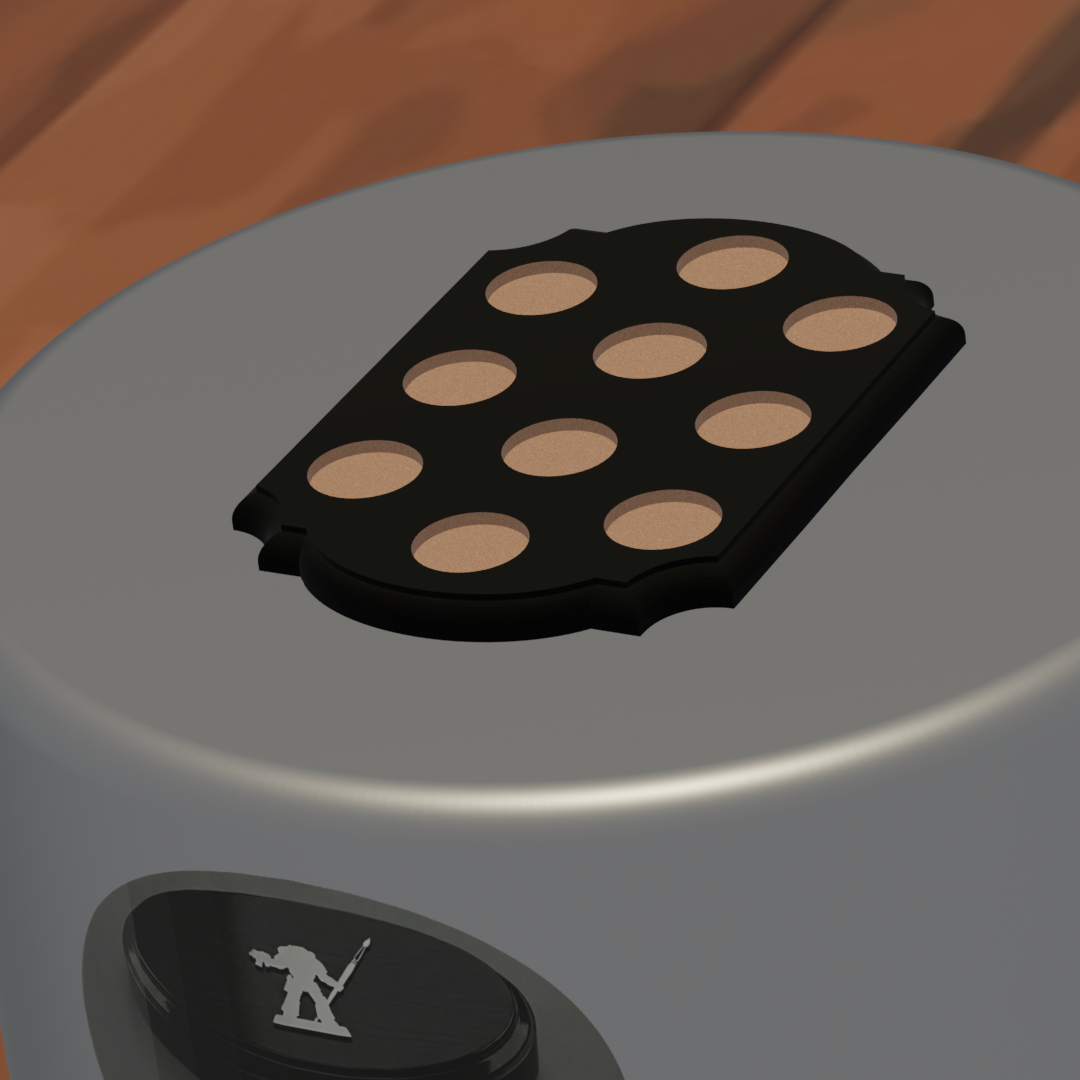
Baroque
Ornate. Commanding. Decadent.
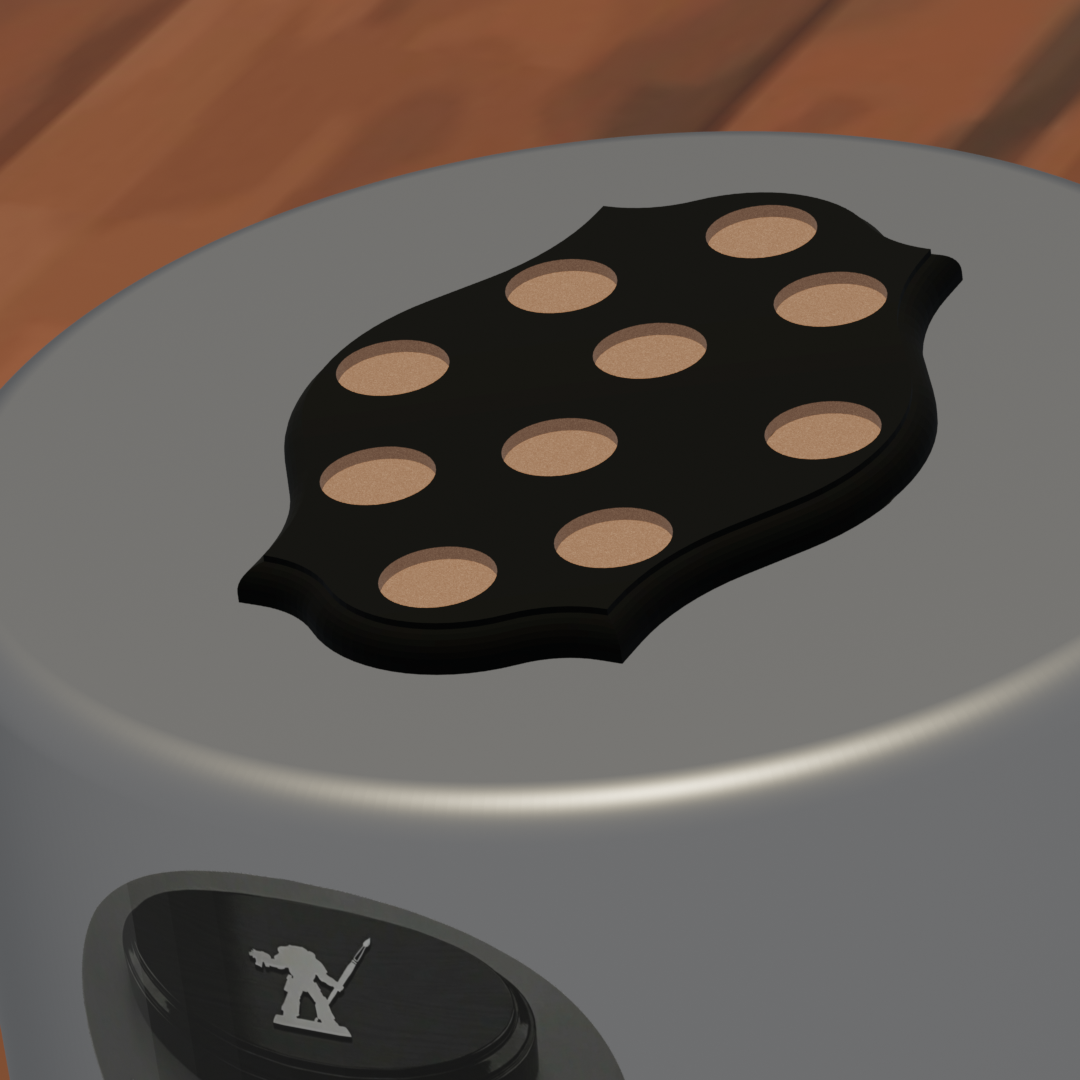
The Baroque plinth is unapologetically expressive. Its sweeping curves and pronounced silhouette evoke grandeur, ceremony, and excess — a design language drawn from cathedrals, banners, and gilded halls rather than parade grounds.
This is a plinth for armies that expect to be looked at.
For champions, chosen elites, and forces that rule by presence as much as power.
The flowing outline creates movement across the formation, breaking rigid geometry in favour of visual drama. Every model feels elevated, framed within a composition that rewards closer inspection.
Bastion
Fortified. Commanding. Immovable.
The Bastion plinth is built on the language of fortification. Its broad shoulders, squared edges, and reinforced profile evoke ramparts and defensive walls — a foundation designed to hold ground, anchor lines, and project absolute control.
This is a plinth for the centre of the battlefield.
For firebases, objective holders, and unbreakable cores.
For units that do not advance — they endure.
The Bastion’s geometry frames the squad as a single, solid structure. Every model contributes to the whole, reinforcing the sense of mass, weight, and permanence.
Cartouche
Framed. Ceremonial. Deliberate.
The Cartouche plinth is defined by enclosure and emphasis. Its elongated, framed silhouette draws from heraldic panels and ceremonial plaques — shapes designed not just to hold, but to present.
This is a plinth for units with identity.
For forces that carry symbols, histories, and purpose.
For squads meant to be read as a single statement.
The Cartouche shape creates a strong central axis, naturally pulling the eye inward and anchoring attention on the unit as a whole. It doesn’t scatter focus — it concentrates it.
Curvilinear
Fluid. Balanced. Intentional.
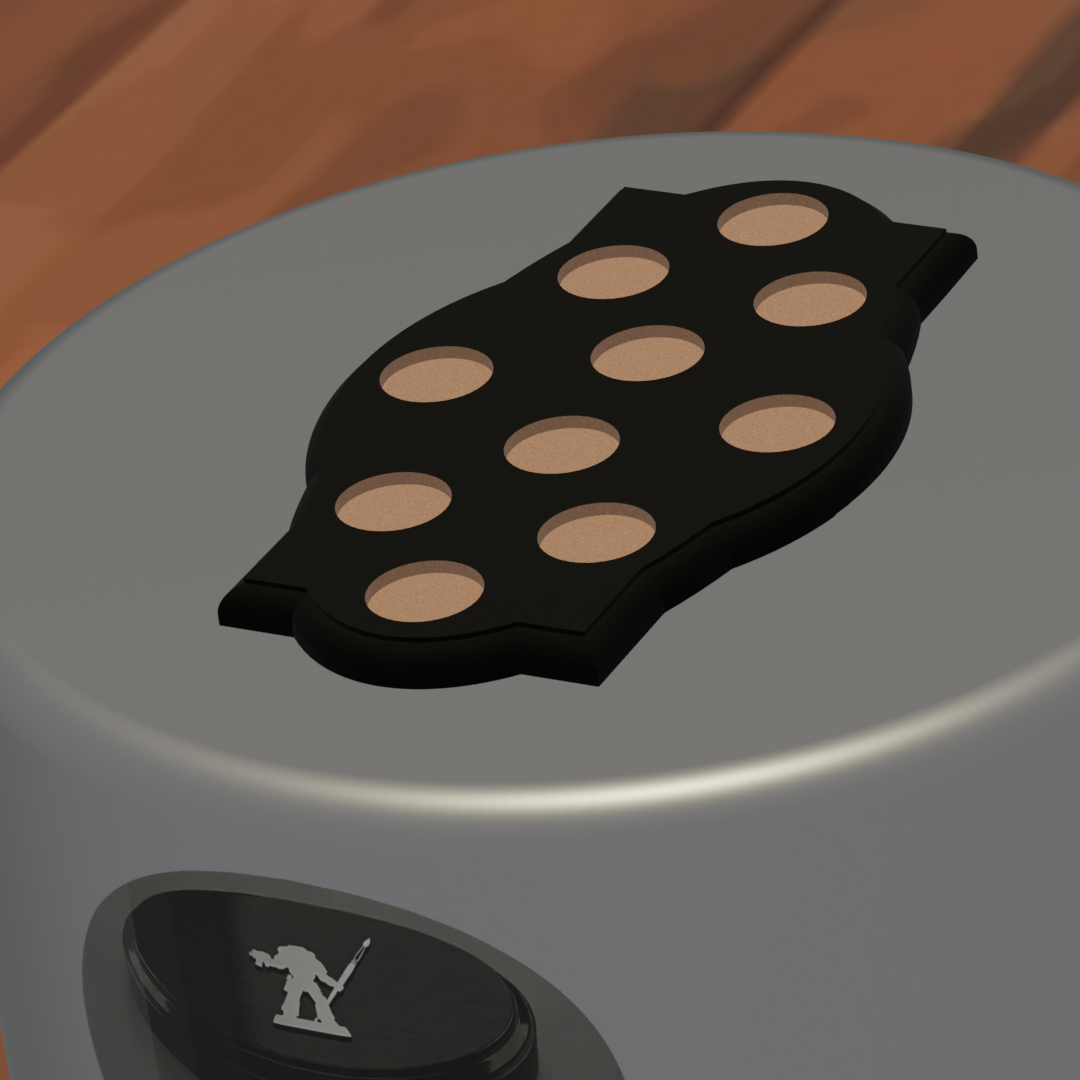
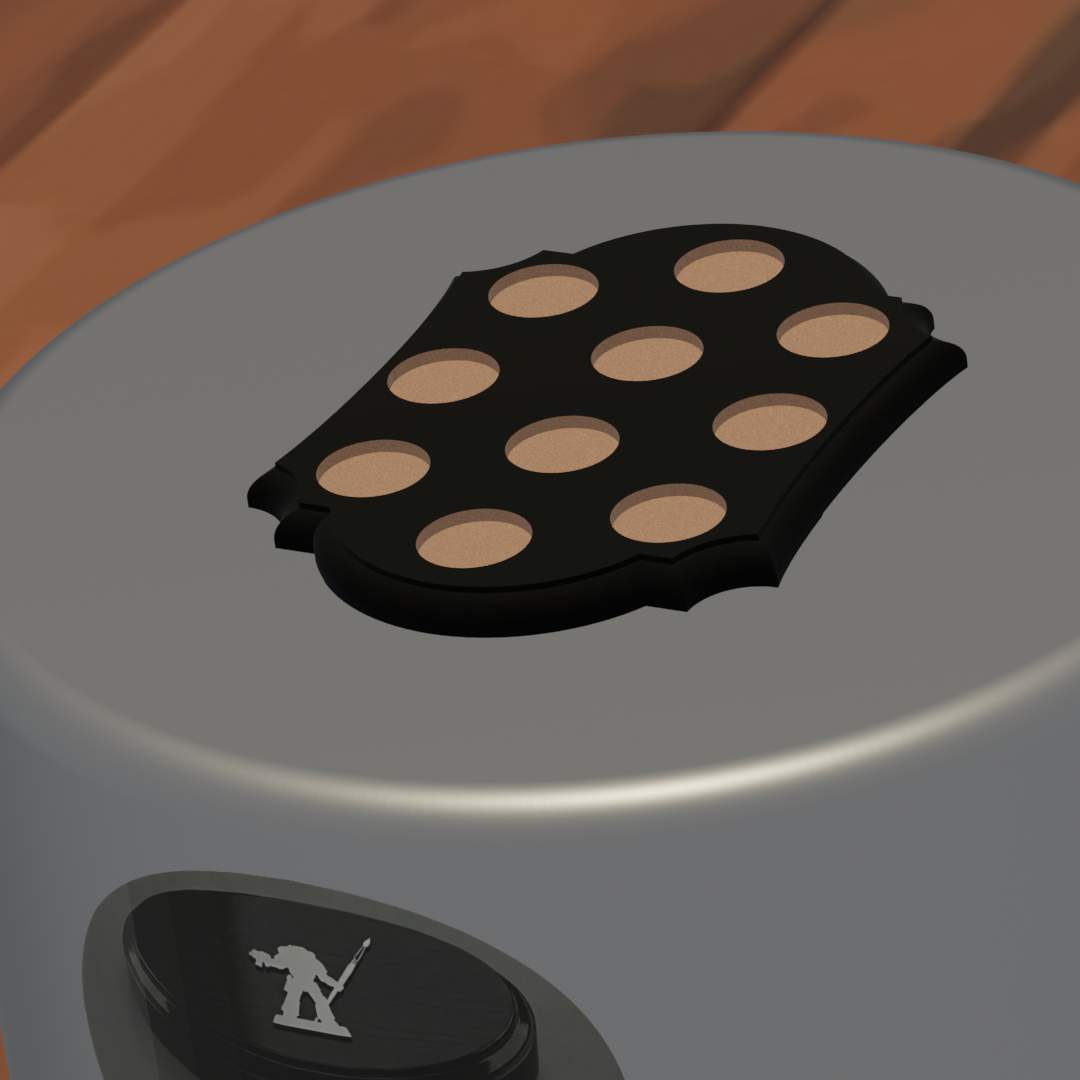
The Curvilinear plinth is defined by motion rather than rigidity. Its continuous arcs and softened transitions create a sense of flow across the formation — a design that feels dynamic, cohesive, and quietly confident.
This is a plinth for armies that move as one.
For forces defined by momentum, elegance, or controlled aggression.
For squads that look better when the eye is allowed to travel.
The Curvilinear silhouette removes hard visual stops, guiding attention naturally from model to model. The result is a formation that feels alive — unified without being constrained.
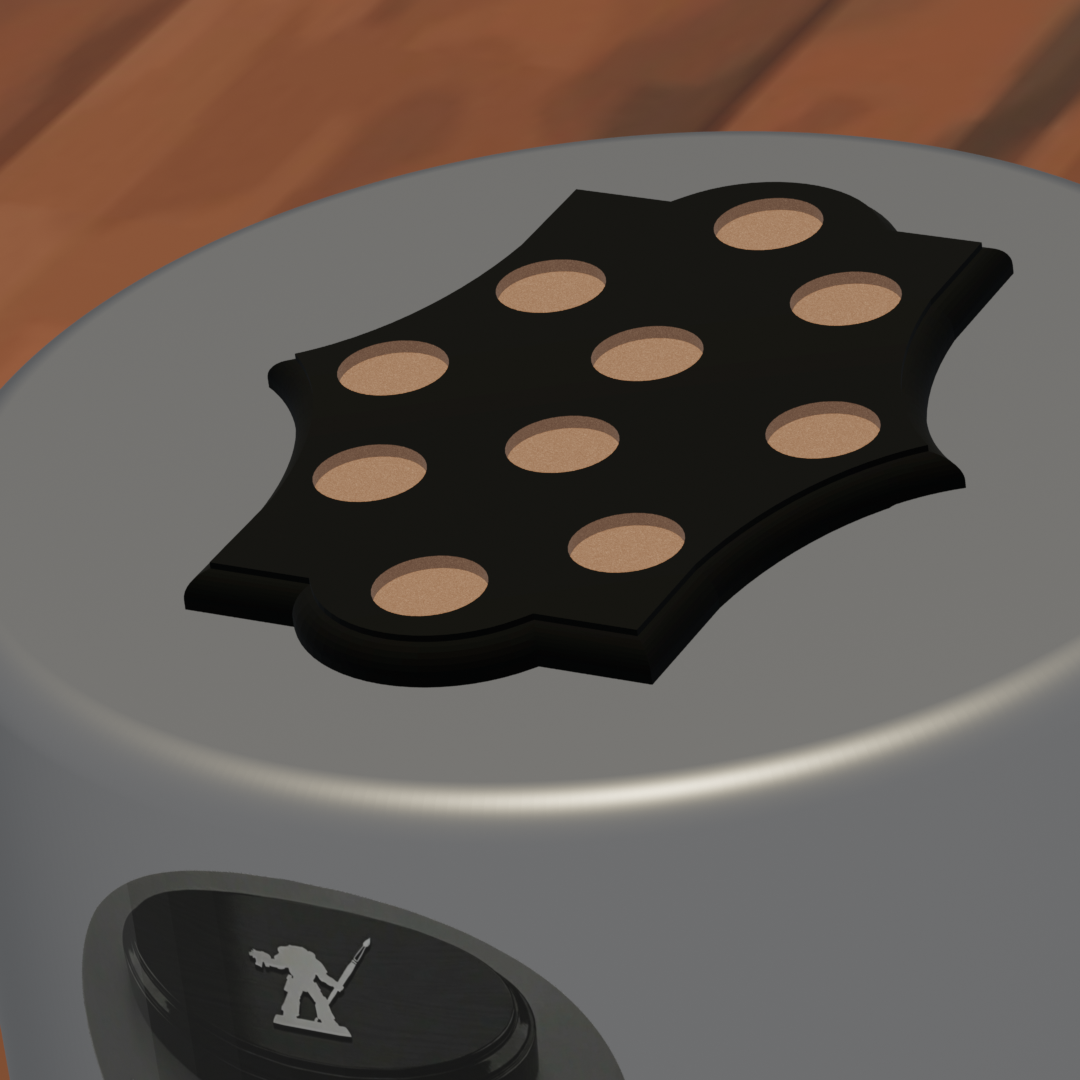
Moroccan Ogee
Exotic. Rhythmic. Refined.
The Moroccan Ogee plinth draws on architectural forms defined by mirrored curves and flowing points — a silhouette that feels both ancient and intentional. Its shape carries a sense of craft and ceremony, without excess or ornamentation.
This is a plinth for armies with character.
For forces that feel ritualistic, arcane, or culturally distinct.
For squads that deserve more than rigid geometry.
The ogee profile introduces visual cadence across the formation, creating soft peaks and recesses that guide the eye naturally from model to model. The result is a display that feels composed, deliberate, and quietly striking.
Notched Shield
Defensive. Disciplined. Unyielding.
The Notched Shield plinth is inspired by the practical geometry of war-worn shields — forms shaped not just for heraldry, but for survival. The subtle cut-outs and squared shoulders give the silhouette a hardened, utilitarian character, suggesting formations that advance behind armour and discipline rather than flourish.
This is a plinth for steadfast units.
For shield walls, gun lines, and immovable cores.
For squads that hold ground when others break.
The notched profile creates a sense of layered protection, framing the unit as a cohesive defensive block rather than a loose gathering of individuals.
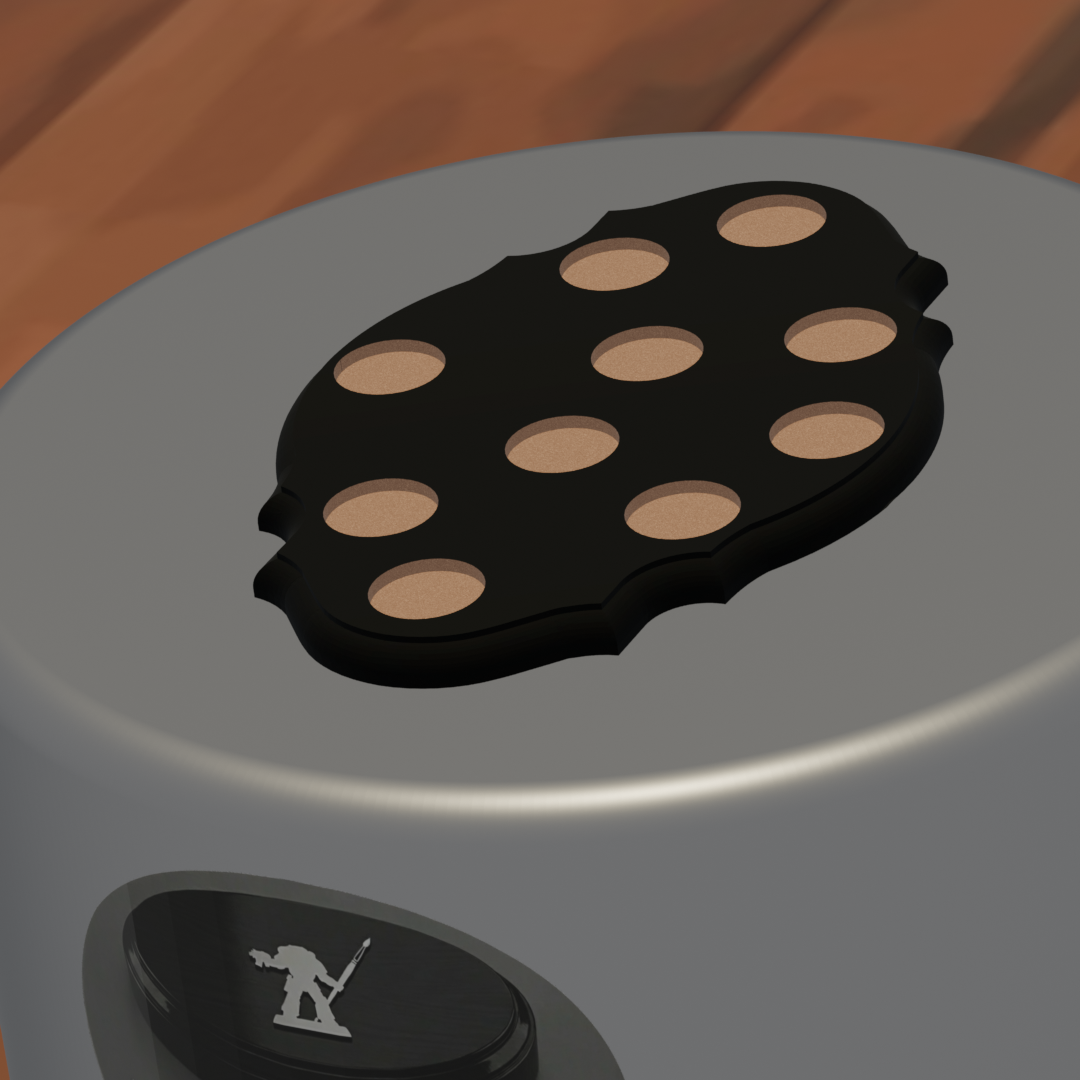
Quatrefoil
Sacred. Balanced. Enduring.
The Quatrefoil plinth draws on one of the most enduring shapes in classical and gothic design — a form built on symmetry, repetition, and quiet authority. Its four-lobed silhouette feels timeless, deliberate, and composed, lending your army a sense of order that reads instantly at a glance.
This is a plinth for armies that feel established.
For forces with history, ritual, and structure.
For squads that stand firm rather than surge forward.
The Quatrefoil shape creates a calm, balanced visual field, anchoring the unit as a single, unified presence. Every model feels equally weighted within the formation — no distractions, no imbalance.
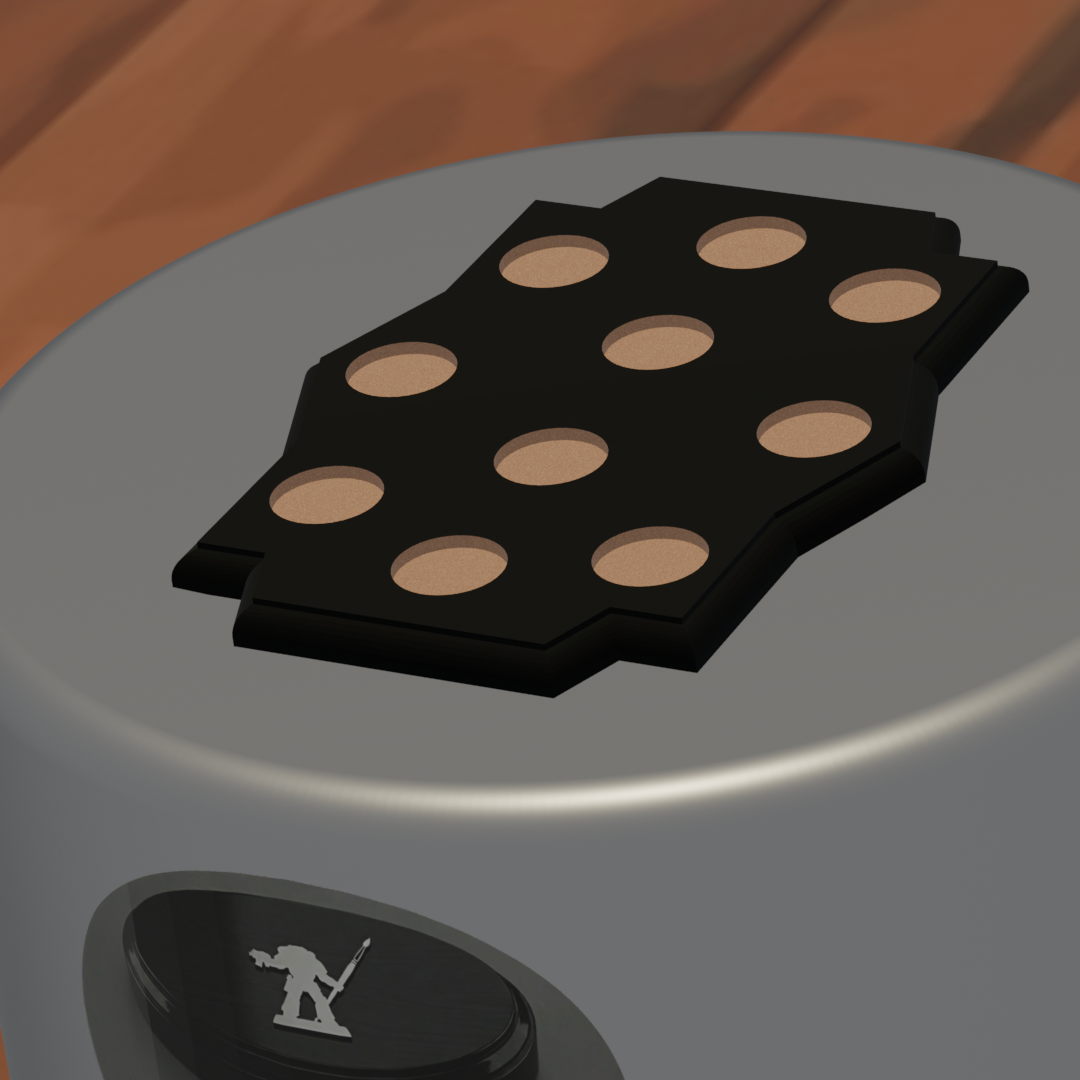
Starburst
Dynamic. Assertive. Unmistakable.
The Starburst plinth is defined by motion. Its faceted outline radiates outward, creating a sense of energy and intent even when the unit stands still. This is a shape that feels active — as though the formation is moments away from advancing.
This plinth is for aggressive armies.
For shock troops, vanguards, and rapid assault units.
For squads that dominate the eye the instant they’re placed on the table or shelf.
The angular geometry breaks away from traditional symmetry, giving the formation a forward-driving presence that commands attention without overwhelming the models themselves.
Escutcheon
Heraldic. Authoritative. Enduring.
The Escutcheon plinth takes its name from the classic shield crest — a form long associated with identity, allegiance, and command. Its bold silhouette feels grounded and deliberate, framing your unit as something claimed, marked, and unified.
This is a plinth for armies with banners to bear.
For factions defined by heraldry, honour, and lineage.
For squads that stand as symbols as much as soldiers.
The shield-like outline creates a strong visual centre, enclosing the formation with purpose and intent. Every model reads as part of a single device — not a collection of individuals.